Black White Doodles Easter Pattern Paper: A Practical Guide to Monochromatic Digital Design
The world of digital crafting has expanded rapidly, offering creators a vast array of tools to bring their visions to life. Among the most versatile resources available today is Black White Doodles Easter Pattern Paper. This specific category of digital assets has gained significant traction not because it follows current color trends, but because it deliberately steps away from them. By stripping away color and focusing on line work, texture, and composition, these papers offer a unique aesthetic that bridges the gap between vintage scrapbooking and modern minimalist design.
For adults aged 20 to 50 who are evaluating creative resources for projects like junk journals, card making, or mixed media art, understanding the distinct value proposition of black and white doodle patterns is essential. Unlike traditional pastel Easter designs that rely heavily on soft pinks and yellows, this monochromatic approach provides a sophisticated backdrop that allows other elements to take center stage. Whether you are a seasoned designer or a hobbyist looking to elevate your craft, exploring the nuances of Easter Doodle Seamless Pattern collections can significantly impact the quality and longevity of your final output.
Distinguishing Features of Monochromatic Easter Designs
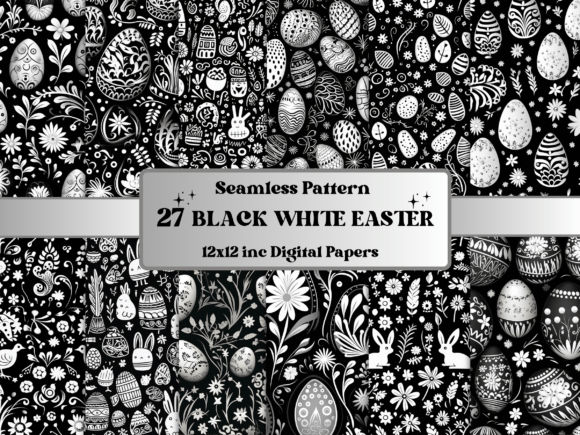
What exactly sets Black White Doodles Easter Pattern Paper apart from standard digital paper packs? The primary distinction lies in the rendering style and the resulting versatility. These collections typically feature 27 stunning seamless pattern digital papers that blend fantasy, enchanted, floral, ephemera, and doodle elements into a cohesive visual language. The "doodle" aspect implies a hand-drawn, imperfect quality that adds character and warmth, while the "black and white" constraint ensures timeless appeal.
When you examine a high-quality set, such as one featuring classic black and white doodle vector styles, you will notice the attention to detail in every line. Each 12x12 inch paper is crafted to be seamless, meaning the edges align perfectly when tiled. This technical precision is crucial for backgrounds that need to cover large areas without visible breaks. Furthermore, the absence of color removes the risk of clashing with photos or embellishments. In a typical Easter project, where bright eggs and bunnies might compete for attention, a monochromatic background acts as a neutral canvas, ensuring the focal point remains clear.
This approach differs significantly from raster-based images found in free stock photo libraries. While those images may be low-resolution or have inconsistent lighting, dedicated digital paper sets offer consistent line weights and professional vector quality. This makes them ideal for printing at various sizes without pixelation, a critical factor for physical crafts like scrapbooks and greeting cards.
Comparison with Traditional Color-Based Easter Papers
When evaluating options, many creators find themselves torn between vibrant, colorful Easter papers and the understated elegance of B W Background designs. To make an informed decision, it is helpful to compare the strengths and limitations of each approach.
- Vibrant Color Papers: These are often chosen for their immediate festive feel. They are excellent for children's crafts, party invitations, and projects where the goal is high energy and celebration. However, they can sometimes overwhelm a layout, making it difficult to add text or photographs without creating visual clutter. They also tend to date quickly, following seasonal color trends that may fall out of fashion within a year.
- Black White Doodles: Conversely, monochromatic papers offer a timeless aesthetic. Because they lack hue, they do not clash with any color palette. A black and white Easter pattern can sit comfortably next to a photo taken in full color, sepia tones, or even a different monochromatic scheme. This flexibility makes them superior for archival projects, such as family scrapbooks intended to last for decades.
The tradeoff here is initial impact. If a user wants a design that screams "Easter" immediately upon viewing, a colorful paper might be more effective. However, if the goal is sophistication and cohesion, the black and white option wins. The "sophisticated black and white designs" mentioned in product descriptions cater to an audience that values subtlety over flashiness. This demographic often includes adult crafters who appreciate the artistic merit of line work and negative space.
Practical Applications Across Creative Mediums
The utility of Black White Doodles Easter Pattern Paper extends far beyond simple decoration. Its versatility allows it to serve multiple functions across different mediums, making it a cost-effective investment for serious creators.
Junk Journals and Scrapbooking
In the realm of junk journaling, texture and layering are paramount. Junk journals often involve mixing disparate materials—old book pages, fabric scraps, ticket stubs, and printed ephemera. A solid black and white pattern serves as an excellent base layer. It provides structure without dominating the page. When used as a background for handwritten notes or pressed flowers, the contrast highlights the organic textures of the added items. The seamless nature of these papers ensures that whether you are tiling a background or using a single sheet as a backing for a pocket, the visual flow remains uninterrupted.
Card Making and Stationery
For card makers, the challenge is often balancing the message with the design. A busy, colorful background can make a heartfelt message hard to read. Easter Eggs Pattern papers rendered in black and white solve this problem. They allow for bold typography and elegant script to shine. You can create chic and stylish Easter cards that make a statement through form rather than color. Additionally, these papers are perfect for creating envelopes or liners that maintain a cohesive look throughout the entire stationery suite.
Mixed Media Art and Printables
Mixed media artists frequently use digital papers as underlays for painting, stamping, or collage. The high-contrast lines of a doodle pattern provide a guide for shading and depth. An artist might paint over a black and white bunny illustration, adding selective color to just the eyes or a bow tie, creating a striking focal point. Similarly, for print-on-demand services, these designs are highly adaptable. They can be easily recolored by the end-user or used as-is for black-and-white prints, expanding the potential market reach.
Decision Factors: When to Choose Monochrome vs. Alternatives
Selecting the right digital resource requires honest self-assessment regarding the project's goals. Here are key factors to consider when deciding if Black White Doodles Easter Pattern Paper is the right choice for your needs.
- Project Longevity: If you are creating something meant to be kept for years, such as a family history scrapbook, monochrome is the safer bet. Colors fade, and trends change; black and white remains classic.
- Existing Content: Do you already have photos or embellishments that are colorful? If so, adding more color to the background may result in a chaotic design. Black and white papers act as a unifying element that ties diverse components together.
- Printing Constraints: Are you printing on a home printer? High-contrast black and white graphics often print more sharply and use less ink than dense, full-color patterns. This can save money and reduce wear on your printer heads.
- Aesthetic Preference: Does your personal style lean towards minimalism or maximalism? If you prefer clean lines and organized layouts, the "fantasy, enchanted, floral" elements of a doodle collection will likely resonate more than a busy, multi-colored scene.
However, there are situations where this type of paper might not be the best fit. For instance, if you are designing a flyer for a kids' birthday party where the goal is to generate excitement and energy, the starkness of black and white might feel too formal or somber. In those cases, a vibrant, saturated palette would be more appropriate. Similarly, if the project relies heavily on color theory to convey a specific mood (such as using pastels to evoke spring), introducing a strict monochrome theme could undermine the intended emotional response.
Evaluating Quality and Technical Specifications
When comparing products in this category, technical specifications matter just as much as the artistic style. Not all digital papers are created equal. A high-quality set, like the one described with 27 seamless patterns, should offer several advantages over lower-tier alternatives.
First, check the resolution. Professional-grade digital papers are typically 300 DPI at 12x12 inches. This ensures that when you print them, the lines remain crisp and do not appear jagged or blurry. Second, verify the file format. Vector-style files or high-resolution PNGs are preferable to JPEGs, which can introduce compression artifacts that ruin fine line work. Finally, consider the variety within the pack. A good collection offers a mix of dense patterns, sparse layouts, and solid backgrounds to ensure you have enough variety for complex projects without running out of options.
The "Black White Doodles Easter Pattern Paper" concept represents a shift towards intentional design. It moves away from the impulse to fill every inch with color and instead embraces the power of simplicity. For the discerning creator, this approach offers a level of control and elegance that is difficult to achieve with generic, colorful templates. By carefully weighing the benefits of versatility, timelessness, and professional quality against the specific needs of your project, you can determine if this monochromatic path is the right one for your next creative endeavor.