3D Knitting Yarn Fabric Seamless Pattern: A Comprehensive Evaluation
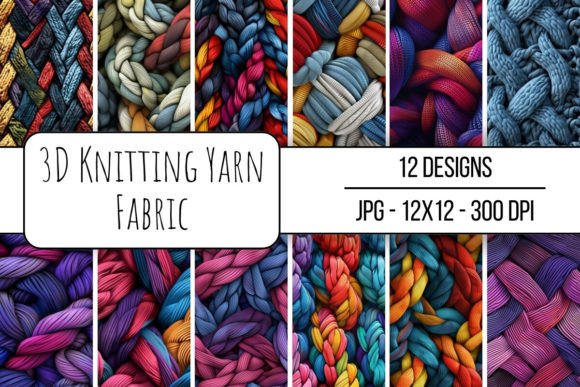
In the realm of digital design and print-on-demand (POD) manufacturing, texture is a critical element that distinguishes professional work from amateur output. The 3D Knitting Yarn Fabric Seamless Pattern represents a specific category of digital assets designed to replicate the tactile complexity of knitted textiles within a two-dimensional format. This resource consists of 12 distinct high-definition images, each capturing the intricate interplay of loops, stitches, and shadows characteristic of yarn-based fabrics. For designers, entrepreneurs, and creatives, understanding the technical specifications and practical applications of this asset is essential before integrating it into a workflow.
Understanding the Asset Specifications
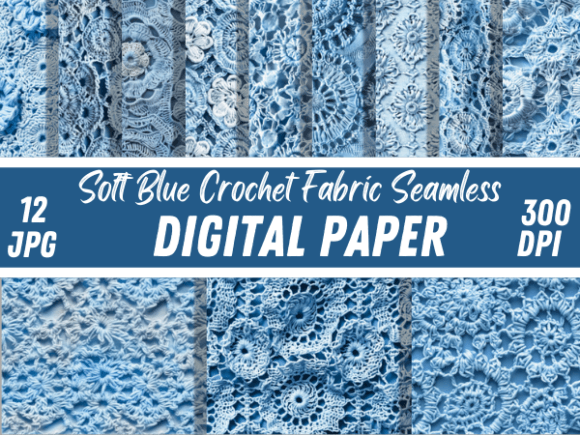
The core value of this collection lies in its technical precision. Each image is provided in JPG format with dimensions of 12 x 12 inches at a resolution of 300 DPI. This resolution is the industry standard for high-quality printing, ensuring that when the pattern is scaled or applied to physical products, the result remains crisp without pixelation. The seamless nature of the pattern allows for tiling; this means the design can be repeated infinitely in any direction without visible seams, making it ideal for covering large surface areas on fabric rolls, apparel, or digital backgrounds.
The package includes 12 unique variations, offering a range of colorful designs. This variety prevents visual monotony in projects requiring multiple assets. Furthermore, the files are delivered as an instant digital download in a single ZIP archive, with individual files clearly labeled. This organizational structure streamlines the post-purchase process, allowing users to locate specific textures immediately without sifting through unsorted data. Crucially, these files are watermark-free, which is a significant advantage for commercial use where branding integrity must remain intact.
Primary Applications and Use Cases
The versatility of the 3D Knitting Yarn Fabric Seamless Pattern extends across several creative sectors. One of the most prominent applications is in the Print-on-Demand industry. Designers utilize these textures to create T-shirts, phone cases, and homeware items that mimic the look of actual knitted garments. By overlaying graphics onto this textured background, creators can produce products that appear more organic and tactile than flat vector designs.
- Graphic Design and Web Development: These patterns serve as effective backgrounds for websites, social media banners, and digital advertisements. The depth provided by the 3D effect draws user attention and adds a layer of sophistication to digital interfaces.
- Stationery and Planners: For those designing notebooks, journals, or planners, these textures offer a cozy, inviting aesthetic that appeals to consumers looking for functional yet stylish office supplies.
- Crafting and Cutting Machines: Users of Silhouette Cameo or Cricut machines often require layered designs. The detailed texture of the knitting pattern provides a realistic backdrop for cut-out elements, enhancing the final appearance of stickers, decals, and vinyl projects.
- Wall Art and Printables: The high resolution supports large-scale printing, making these images suitable for creating wall art, posters, and printable designs that maintain quality even when enlarged.
Evaluating Benefits and Tradeoffs
When considering the acquisition of digital textures, it is important to weigh the benefits against potential limitations. The primary advantage of using a pre-made 3D Knitting Yarn Fabric Seamless Pattern is efficiency. Creating a photorealistic 3D knit texture from scratch requires advanced skills in software like Blender or Photoshop, along with significant time investment. Purchasing a ready-made asset bypasses this learning curve, allowing designers to focus on composition and layout rather than texture generation.
Additionally, the ability to resize these images easily offers flexibility. Whether a designer needs a small icon background or a full-page wallpaper, the 300 DPI resolution ensures that the file scales down without losing detail. The lack of watermarks further enhances the commercial viability of the product, removing legal hurdles associated with stock imagery.
However, there are tradeoffs to consider. Because these are raster images (JPG), they are not infinitely scalable in the way vector graphics are. If a user attempts to enlarge the image beyond its original resolution for massive formats, such as billboards, the texture may eventually become pixelated. While the 12 x 12 inch size is robust for most POD and web applications, it is not suitable for ultra-large format printing without additional upscaling techniques. Furthermore, since the texture is static, it lacks the dynamic lighting changes found in true 3D renders, which might be a limitation for highly interactive 3D modeling projects.
Situational Fit and Alternatives
This digital asset is a strong fit for professionals who need consistent, high-quality textures for commercial products where speed and cost-effectiveness are priorities. It is particularly well-suited for POD entrepreneurs who need to rapidly prototype new designs or for graphic designers working under tight deadlines. The colorful nature of the designs also makes them appropriate for brands targeting younger demographics or those seeking a playful, handmade aesthetic.
Conversely, alternatives may be worth considering depending on specific project requirements. If a project demands a completely custom color palette that does not match the provided 12 designs, purchasing a separate set or creating a custom texture might be necessary. Similarly, if the goal is to integrate the texture into a 3D environment where lighting and shadows need to interact dynamically with the object's geometry, a procedural material or a true 3D model would be superior to a flat JPG texture map.
For users focused solely on black-and-white line art or minimalist aesthetics, the colorful and complex nature of the knitting pattern might feel too busy. In such cases, simpler geometric patterns or solid colors would provide better contrast for typography and other design elements.
Practical Decision-Making Insights
To determine if this collection aligns with your goals, evaluate your current workflow and inventory needs. Ask yourself if you have a recurring need for textile-like backgrounds in your upcoming projects. If you frequently design for clothing or stationery, the immediate availability of 12 high-resolution options can significantly reduce production time. The fact that the files are organized and labeled suggests that the provider understands the needs of professional workflows, reducing the administrative burden on the buyer.
It is also vital to remember that this is a digital download only. There is no physical item shipped, which eliminates shipping costs and delays but requires a reliable internet connection for the initial transfer. Users should ensure their storage solutions are adequate to handle the ZIP file and subsequent extraction of individual high-resolution images.
Ultimately, the decision rests on the balance between convenience and customization. The 3D Knitting Yarn Fabric Seamless Pattern offers a high degree of convenience with minimal compromise on quality for standard print and web applications. It serves as a foundational tool that empowers creativity, allowing users to experiment with various layouts and concepts without the technical overhead of generating textures from scratch. For those willing to accept the limitations of raster graphics in exchange for immediate, professional-grade assets, this collection presents a logical and efficient choice.